Contents
What Does a Baby Cockroach Look Like?
Usually, the key to preventing and controlling baby Cockroaches infestations is early detection. It’s important to understand how cockroaches reproduce and to know the difference between small adults, juveniles or babies, as their presence is frequently one of the signs of a problem. You need to Know the average size of the type of cockroach you are dealing with and know what they look like (colors, wings, stripes, etc.).
The babies are much smaller than the adults; which is why you need to know the average size of an adult. The first thing you need to do is determine which type of cockroach you’re dealing with. Once you know what you’re dealing with and how big an adult is supposed to be, you can quickly just compare them visually. If there are a few that are smaller than what they’re supposed to be, then you’re dealing with nymphs or younger, non-adult roaches.
Juveniles and nymphs are also not fully developed. They will usually not possess certain features of an adult. Many species of roaches will have wings and stripes. If it’s missing wings entirely, and the adults are known to have wings, then you know what they are.
Cockroach Reproduction
like many other insects,Cockroaches pass through several stages of development. These include the egg, several nymph stages and the adult. The cockroach life cycle begins when a female lays an egg case. Some species of cockroaches carry the case around until it is time for the eggs to hatch, and then deposits it in a safe place, while some species deposit it immediately after it is laid. It may take 8 to 12 weeks for the eggs to hatch. Baby cockroaches known as nymphs then mature into adults after a few months.
Here is an exemple of life cycle of an American cockroach:

.
How to Identify a Baby Cockroach
Cockroach nymphs in your home may be a sign of an infestation. Because cockroaches come into contact with bacteria (which can stick to their bodies) that can cause illnesses, they need to be dealt with sooner rather than later. Know how to identify cockroach nymphs of common species in the United States to help prevent serious infestations:
- American cockroaches – American cockroach nymphs are about one-quarter of an inch in length. They change color as they shed their exoskeletons and grow, a process referred to as molting. Nymphs begin as a black-brown color and evolve to the reddish-brown color of adults. Like adults, later stage nymphs also have a halo marking behind their heads.
- German cockroaches – German cockroach nymphs are about one-eighth of an inch long. They are dark brown, almost black, in color. And as they grow, they develop the black lines behind their heads and change to the pale brown or tan color of adults.
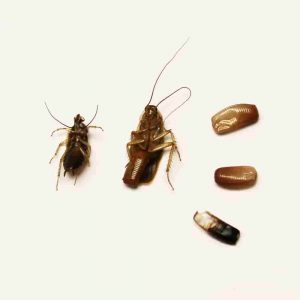
- Brown-banded cockroaches – Brown-banded cockroach nymphs are small, measuring about one-eighth of an inch in length. Like adults, they are brown and have two wide, light-brown colored bands behind their heads.
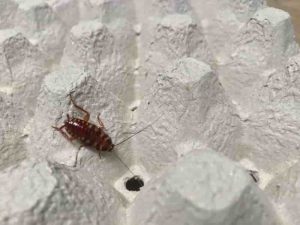
- Oriental cockroaches – Oriental cockroach nymphs are about one-quarter inch in length and are reddish brown in color. As they grow, their color darkens. Adults often appear black in color.
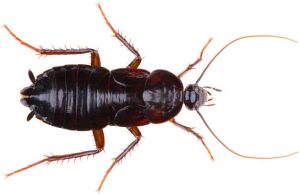
- Smoky brown cockroaches – Smoky brown cockroach nymphs are about three-eighths of an inch long and are dark brown to black with white markings. They change to lighter shades of mahogany before eventually reaching the smoky brown color of adults.

What it Means to See Baby Roaches in Your House
Having baby cockroaches means you’ve got a cockroach problem, and it is a big one. If nymphs and juveniles are running around, then that means some adults are reproducing and creating more and more of them. Adult female cockroaches are able to reproduce quickly. They produce egg cases, called oothecae, which can contain up to 50 eggs depending on the species. They’ll be able to lay between 6-30 cases during their adult life.
Baby cockroaches can carry bacteria on their bodies. They transfer these pathogens through contact with food and utensils. Molted skins, saliva, and waste from young cockroaches may also trigger allergic reactions in some people, especially those with asthma.
How to control Baby Cockroaches
I suggest that Homeowners take those steps to prevent or remove baby cockroaches. just to know Steps taken to prevent adult cockroaches will also prevent the nymphs.
Some methods are:
- Keeping kitchens and bathrooms clean and free of moisture
- Caulking cracks and holes that serve as hiding places
- Inspecting appliances like refrigerators, stoves, and dishwashers regularly
- Setting sticky traps near pantries and cabinets
- Checking used furniture carefully before bringing it inside
Because cockroaches deposit their egg sacs in dark, hidden areas, treating for only the visible adult pests may entirely miss this next generation and insecticide treatments do not kill the egg cases. That’s why a professional pest control is required to help you after an infestation.
Homeowners with baby cockroach problems can contact professional Pest control for an effective pest removal plan.
10 Incredible Roach Facts You Might Not Know
- A newly-hatched cockroach, which is about the size of a grain of sand, can run almost as fast as an adult roach.
- Roaches can live for up to a week without their heads. They have an open circulatory system, so they don’t need their mouths or heads to breathe. The only reason they die is because they can’t drink or eat without a head.
- It’s estimated that cockroaches are 280 million years old and originated in the Carboniferous era.
- Roaches can hold their breath for up to 40 minutes at a time, and can survive underwater for up to 30 minutes.
- How fast can roaches run? Up to three miles an hour. These quick critters can spread bacteria and germs quickly with speeds that fast.
- The largest cockroach is six inches in length and has a one-foot wingspan.
- There are over 4,000 different cockroach species across the globe.
- Roaches can also live without food for a month because they’re cold-blooded. But they can only survive one week without water.
- The American cockroach is particularly attracted to beer and other alcoholic beverages.
- The average roach lives up to one year.
Frequently Asked Questions
How Long Do Baby Roaches Stay Babies?
Roaches are just like other insects in that they reach adulthood by going through several molting processes at different stages in their lives. Nymphs hatch from their eggs after 20-60 days.
Eventually, babies will develop wings and complete a series of molts to grow into adults. There’s a transitional phase in between each molt known as an instar. Usually, a baby will go through six to seven instars before becoming a full-grown adult. This process takes between 40 and 160 days, depending on the species of the roach and the temperature of the environment.
How many babies do roaches have at one time?
Cockroaches vary considerably in the number of eggs (and future hatchlings) a female can produce each time she lays an egg sac. For Brown-Banded roaches, it’s around 18. For Oriental and American cockroaches, around 16. For Pennsylvania Wood Roaches it can be as many as 32. And for German roaches as many as 50.
How many babies can a cockroach have over a lifetime?
Cockroaches can produce a lot of young. American cockroaches for example, may lay 2 egg sacs per month, each holding 16 eggs. German roaches may lay a single egg sac per month, each holding up to 50 eggs. Over a lifetime, a single American cockroach female typically produces 150 cockroach babies, while a single German cockroach female can produce as many as 400.
How many baby roaches can one have in a home?
So long as they have access to food and water and their numbers aren’t controlled by you or natural predators, there’s no limit to the number of baby or adult roaches that can infest a home.
No. Baby roaches are born without wings. And while some species are able to fly when they reach adulthood, as nymphs their wings are either nonexistent or too underdeveloped to make flying possible.
Do baby cockroaches jump?
No. Many species of baby roach can move quickly, but their legs are not made for jumping.
Do baby roaches bite?
They could bite you, but roaches for the most part try to avoid such close and dangerous contact with humans. Baby roach bites do happen, but not very often.
Are baby roaches white?
Sometimes. When newly hatched, a baby cockroach is briefly white, then briefly white again each time it molts.
What are baby roaches called?
Baby roaches from the time they hatch to their final stage of growth are known as cockroach nymphs.
Sources:
1.https://www.pestwiki.com/get-rid-of-baby-roaches-pictures/
2.https://cockroachfacts.com/baby-cockroach-what-to-do/
3.https://extension.umd.edu/hgic/topics/cockroaches